

What is the Hilbert Transform Moving Average (HTMA)
The Hilbert Transform Moving Average (HTMA) is a technical analysis tool designed to overcome the limitations of traditional moving averages. Unlike traditional moving averages that use fixed periods, the HTMA adjusts its smoothing period based on the volatility of the market. This allows it to be more responsive to sudden market changes, reducing lag and providing a more accurate representation of the underlying trend.
First introduced by renowned trading systems expert John Ehlers, the HTMA is based on the Hilbert Transform, a mathematical tool that transforms a time-based signal into a frequency-based signal. By applying the Hilbert Transform to price data, the HTMA is able to provide a more accurate representation of price movements and identify trends more effectively.
Advantages of using HTMA over traditional moving averages
The HTMA is a robust technical analysis indicator that offers several advantages over traditional moving averages. One of the main advantages of HTMA is its ability to adapt to changing market conditions and provide a more accurate representation of the underlying trend. Unlike traditional moving averages that rely on fixed smoothing constants, HTMA uses a complex mathematical formula based on the Hilbert Transform to dynamically adjust its smoothing factor, resulting in a more responsive and reliable indicator.
Another significant advantage of HTMA is its ability to reduce lag in trend identification. Traditional moving averages are known for their lag because they are based on past price data. In contrast, HTMA takes into account both the current price and historical price movements, providing a smoother and more accurate representation of the trend in real-time.
HTMA is also known for its ability to filter out the noise and provide more reliable signals. Traditional moving averages are prone to generating false signals in choppy or sideways markets. However, HTMA is designed to filter out the noise and provide more accurate signals, making it particularly useful in volatile markets where sudden price changes can occur.
Finally, HTMA is a versatile tool that can be used in a variety of trading strategies. It can be used in conjunction with other indicators or as a standalone indicator, making it a valuable tool for novice and experienced traders alike.
How to use HTMA in trading
The HTMA is a very useful technical analysis indicator that can help traders identify potential trend reversals and entry/exit points. Here are some best practices for using HTMA in trading:
- Identify the trend: The first step in using HTMA is to identify the underlying trend in the market. This can be done using a combination of HTMA and other technical analysis tools such as support and resistance levels, trend lines, and moving averages.
- Wait for confirmation: Once the trend has been identified, traders should wait for confirmation of a trend reversal or a significant change in the direction of the trend. This can be done using HTMA signals, such as crossovers or divergences, and other technical indicators.
- Set entry and exit points: Once a trend reversal has been confirmed, traders can set their entry and exit points using HTMA signals and other technical analysis tools. Traders should also use risk management techniques such as stop-loss orders and position sizing to effectively manage their trades.
- Combine with other indicators: To improve the accuracy of their trading signals, traders can combine HTMA with other technical indicators such as momentum oscillators, volume indicators, and Fibonacci retracements.
- Backtest and Evaluate: Before using HTMA in live trading, traders should back-test their trading strategy with historical data to evaluate its performance. They should also evaluate their trading strategy on a regular basis and adjust it as needed based on changing market conditions.
By following these best practices, traders can use HTMA to make more informed trading decisions and improve their trading results. However, it’s important to remember that no technical indicator can guarantee trading success, and traders should always use proper risk management techniques to protect their capital.

Limitations of HTMA
The HTMA is a valuable technical indicator that can provide traders with a more accurate representation of price movements. However, like any indicator, it has some limitations that traders need to be aware of. One of the main limitations of HTMA is that it may be slower to react to sudden market changes compared to other indicators. As HTMA takes into account a longer period of time, it may not respond quickly to short-term price movements, which can result in missed trading opportunities or false signals. Additionally, finding the right parameters for HTMA can be challenging, as it depends on the specific market conditions and the trader’s trading style. Lastly, HTMA may not perform well in choppy or sideways markets, as it is designed to identify trends and may generate false signals in volatile or erratic markets. Traders should carefully evaluate these limitations before incorporating HTMA into their trading strategy.
Best practices for using HTMA
When using the HTMA in trading, there are several best practices that traders should follow to increase their chances of success. One such practice is adapting the HTMA parameters based on current market conditions. Traders should monitor market volatility and adjust the HTMA parameters accordingly to ensure the accuracy of the signals generated. Additionally, risk management techniques, such as setting stop-loss orders, should be used to protect against potential losses. It is also essential to backtest the HTMA strategy before implementing it in a live trading environment to ensure its effectiveness. By following these best practices, traders can make informed decisions and potentially improve their trading outcomes when using HTMA.
Example strategy based on Hilbert Transform Moving Average
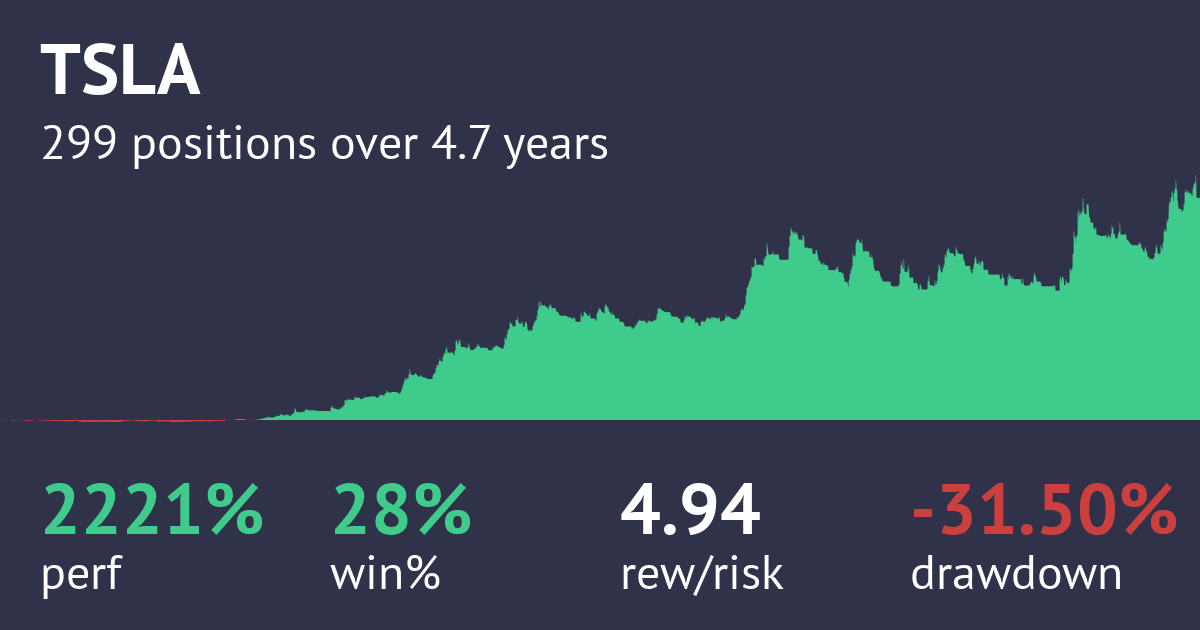
The Hilbert Transform Moving Average can be used in Testing Strategies. To see how exactly it can be used in this way, we provide the following sample. The strategy tests buying and selling rules built around this indicator.
The Bottom Line
In summary, the Hilbert Transform Moving Average (HTMA) is a technical analysis indicator that overcomes the limitations of traditional moving averages by adapting to changing market conditions and reducing lag. HTMA is a versatile tool that can be used in a variety of trading strategies and can filter out market noise to provide reliable signals. While HTMA has some limitations, such as being slower to react to sudden market changes and generating false signals in choppy markets, traders can use best practices such as adjusting parameters based on market conditions, implementing risk management techniques, and backtesting their trading strategies to potentially improve their results when using HTMA.


