


Nike (NKE) stock reported Q3 fiscal 2026 earnings of $0.35 per share, beating the $0.28 consensus estimate by 25%, with revenues of $11.28B also edging past the $11.24B expectation. Despite the beat, shares fell roughly 10% in premarket and extended losses through the session as the company issued Q4 sales guidance of $10.66B to $10.88B, well below the $11.24B analyst estimate. The market reaction signals that investors remain unconvinced the turnaround is happening fast enough.

Key Drivers of the NKE Stock Move
- Main Catalyst: Nike intentionally reduced inventory levels in Q3, taking a near-term revenue hit to clear what management called “unhealthy inventory.” While CEO Elliott Hill framed this as necessary progress toward a year-end turnaround, the Q4 sales guidance came in roughly 3 to 5% below Wall Street expectations, triggering broad selling pressure.
- Bull Case: The Q3 EPS beat of 25% demonstrates improving operational execution, and management’s willingness to absorb short-term pain to rebuild brand health and channel margins could set up a cleaner second half. CEO Hill’s turnaround narrative is intact, and multiple Buy-rated analysts maintained their ratings post-earnings.
- Bear Case: Revenue is still declining year-over-year, soft China performance remains a structural drag, and the forward guidance miss raises the risk that the recovery timeline keeps getting pushed out. With the stock already near 9-year lows heading into earnings, the lack of a meaningful upside surprise is a sentiment setback.
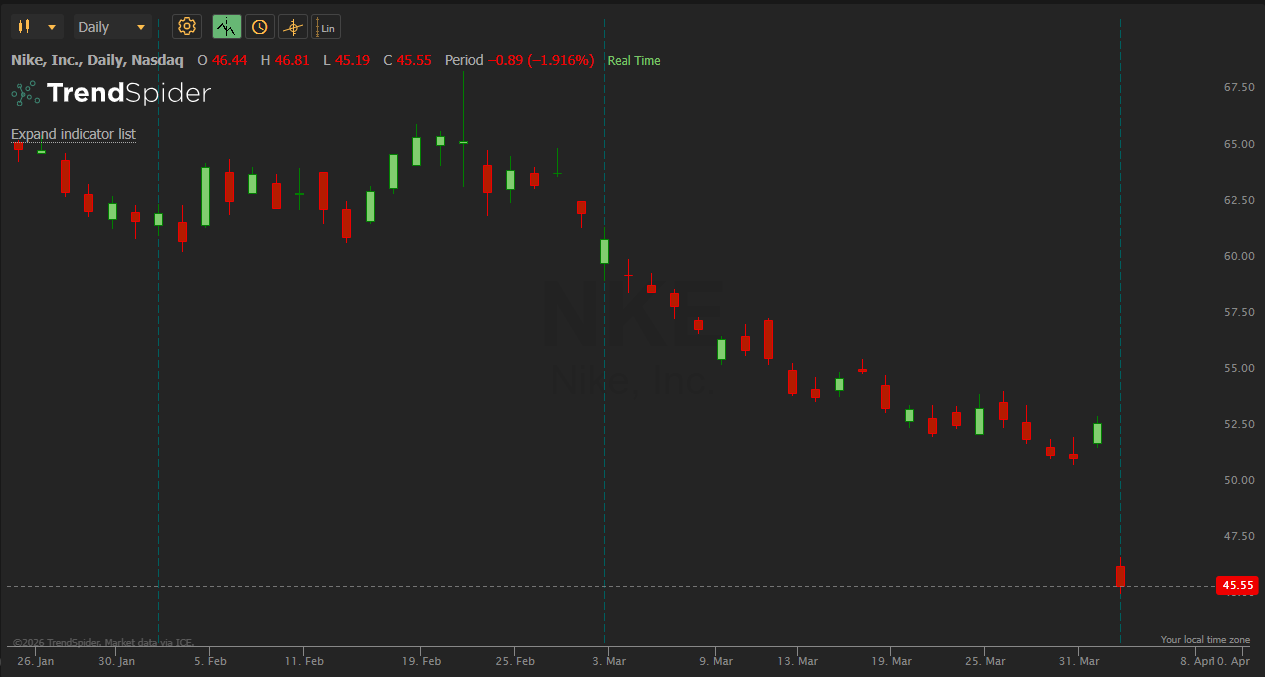
Nike’s chart enters April in a structurally weak position, now trading around the mid-$40s after the post-earnings drop. The Q4 guidance miss resets expectations lower at a time when macro uncertainty and tariff-related consumer spending concerns add additional headwinds. Gross margin pressure of around 200bps and continued softness in China make near-term recovery difficult to price with confidence. Any credible turnaround signal will need to show revenue stabilization, not just cost cuts.
NKE Smart Money Activity
Insider and government activity has been limited and largely non-directional. In February, Philip Knight disposed of 4.5 million shares via gift and conversion, with no cash sale, indicating an estate or charitable transfer rather than a conviction sell. EVP and Chief Legal Officer Robert Leinwand sold approximately $565K worth of stock in February, a modest transaction. On the government side, Democratic Rep. Ro Khanna purchased $1K to $15K worth of NKE in February, a position that is currently down roughly 13%.

NKE Unusual Options
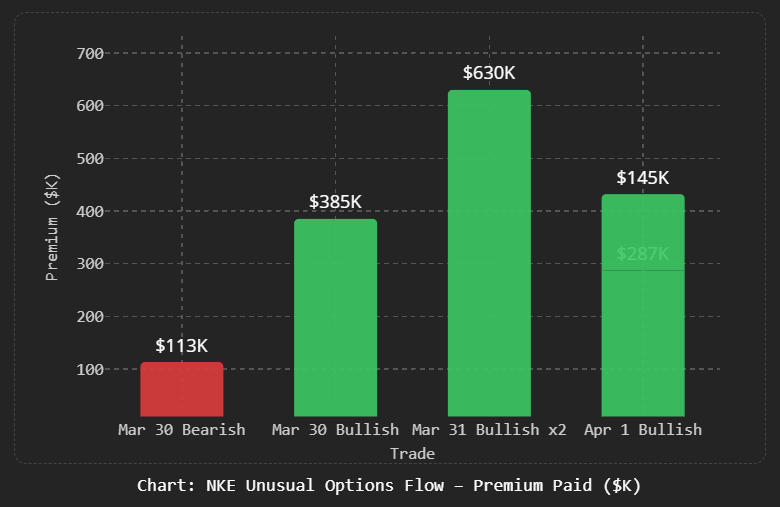
Options flow heading into and around the earnings event was decidedly mixed but leaned bearish on a net basis. On March 30, a notable bearish sweep on the Apr 17 $59 Put paid $113K in premium. A large bullish trade also appeared that same session with a Jan 2028 $50 Put bought at $385K, tagged bullish (as buying deep puts far out of the money at low strikes can reflect downside hedging rather than directional conviction). On March 31, two large bullish block trades hit the Oct 2026 $52.5 Calls, each paying $315K. Post-earnings on April 1, flow includes a $287K bullish trade on the May $45 Call and a $145K sweep on the Jan 2027 $60 Call, suggesting some traders are positioning for a bounce from these depressed levels, though bearish sweep flow on near-term strikes persists.
NKE Analyst Focus
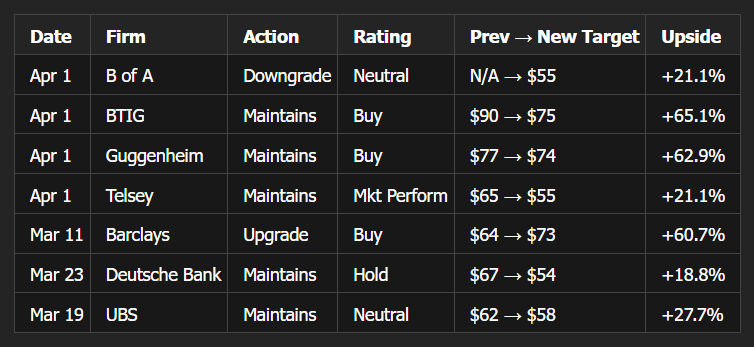
Post-earnings analyst reactions have been swift and negative on price targets, though some bullish conviction remains. Bank of America Securities downgraded the stock to Neutral with a $55 target, while BTIG cut its Buy target to $75 and Guggenheim Partners lowered to $74. Telsey Advisory Group also reduced its Market Perform target to $55. Earlier in the year, Barclays upgraded to Buy at $73, while Deutsche Bank trimmed to $54 (Hold) and UBS remains Neutral at $58. Overall, price targets now range from roughly $54 to $78, highlighting significant disagreement on the turnaround outlook.
NKE Seasonality
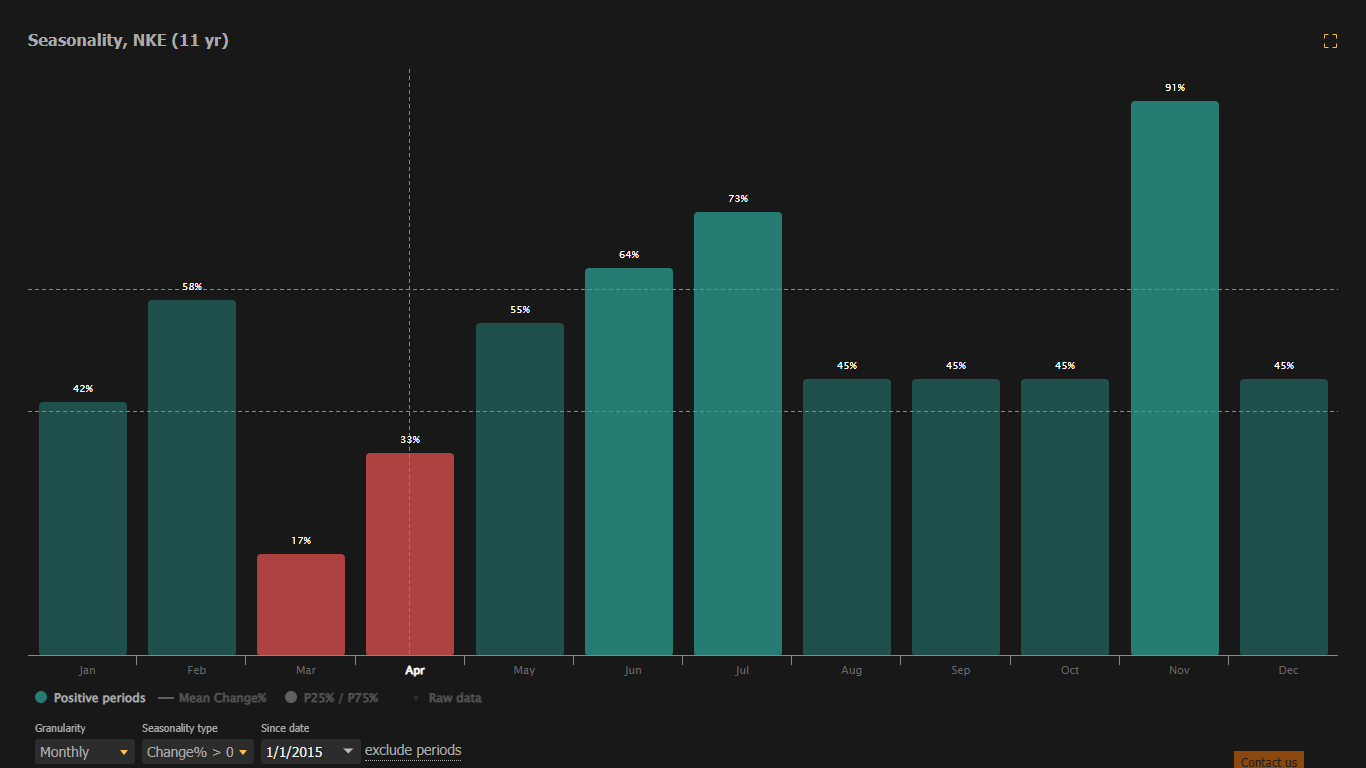
Based on data since January 2015, Nike has shown clear seasonal trends. April has been one of the weakest months, with only 33% positive outcomes and an average return of -2.0%, aligning poorly with the current post-earnings drop. March is the weakest overall, positive just 17% of the time with an average return of -4.5%. In contrast, November stands out as the strongest month, positive 91% of the time with an average gain of +5.1%, while June and July also show consistent strength with average returns of +3.3% and +2.9%. Overall, the near-term seasonal setup remains unfavorable, with a more supportive window for recovery typically emerging into June–July.
NKE Relative Performance
NKE has been underperforming its Consumer Discretionary sector peers through all of 2026. Starting the year at a sector percentile of roughly 35, it briefly climbed toward the low 40s in mid-January before trending lower through March, dropping to a sector percentile near 31 to 33 by late March. The stock is outperforming only about one-third of its sector peers on a yearly basis, a deteriorating trend that reflects both the stock’s prolonged decline and the lack of a definitive catalyst to reverse it. Today’s earnings-driven selloff is likely to push this percentile further down in the next reading.


